
Prof. Grzegorz Pietrzyński from the Nicolaus Copernicus Astronomical Centre of the Polish Academy of Sciences has been awarded funding for the project “Toward Autonomous Observatories”. In the second and final round of the 2025 call, the European Research Council awarded a total of 136 Proof of Concept grants.
The project implemented at the Nicolaus Copernicus Astronomical Centre of the Polish Academy of Sciences received funding of EUR 150,000. The aim of the project is to develop professional software that will enable fully autonomous and simultaneous control of multiple telescopes and scientific instruments. The system will make real-time decisions, including those based on weather conditions, scientific priorities, and observation schedules.
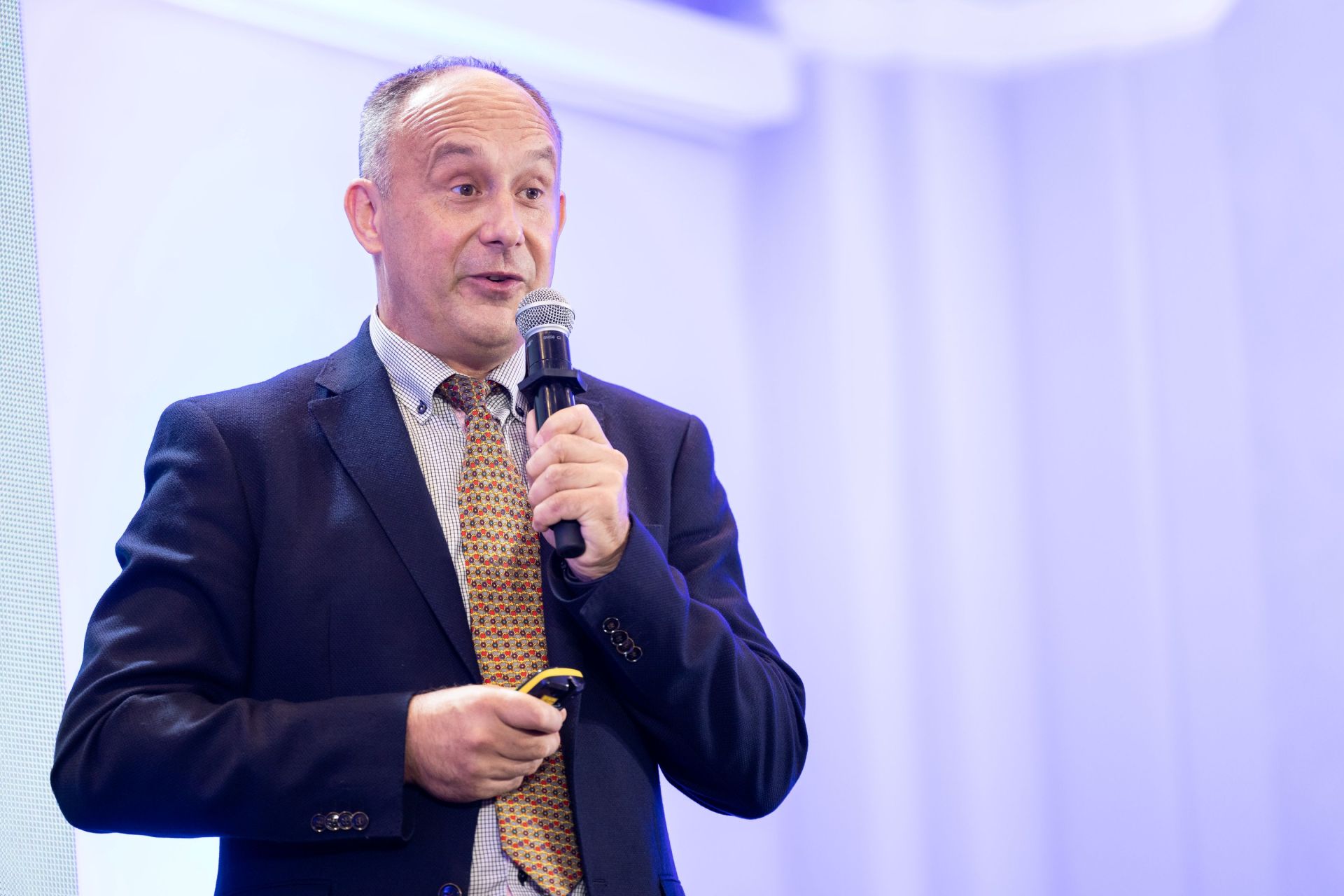 Prof. Grzegorz Pietrzyński during the celebration of the 10th anniversary of the National Science Centre, photo: Michał Łepecki/NCN
Such a solution has the potential to increase the efficiency of astronomical observations by up to 30 percent, improve the quality of the data collected, and reduce the operational costs of large-scale research projects. The new system will be tested at the Rolf Chini Cerro Murphy Observatory in northern Chile, operated by the Nicolaus Copernicus Astronomical Centre of the Polish Academy of Sciences — one of the world’s leading sites for astronomical observations.
Prof. Grzegorz Pietrzyński during the celebration of the 10th anniversary of the National Science Centre, photo: Michał Łepecki/NCN
Such a solution has the potential to increase the efficiency of astronomical observations by up to 30 percent, improve the quality of the data collected, and reduce the operational costs of large-scale research projects. The new system will be tested at the Rolf Chini Cerro Murphy Observatory in northern Chile, operated by the Nicolaus Copernicus Astronomical Centre of the Polish Academy of Sciences — one of the world’s leading sites for astronomical observations.
As Prof. Pietrzyński emphasised in materials published by the institution, “There is no single formal definition of autonomous observatories. The concept presented in the grant description is largely our own original vision.” In the AutObs project, alongside the principal investigator, the team includes Mikołaj Kałuszyński, Dr Marek Górski, and Mirosław Kicia.
Proof of Concept grants are addressed to the winners of earlier ERC grants. They support activities aimed at the practical application of research results — from technology development, through the analysis of implementation potential, to preparation for subsequent stages of commercialisation. The programme is funded under Horizon Europe, the EU framework programme for research and innovation.
Across both rounds of the Proof of Concept 2025 call, 879 proposals were evaluated, with 300 awarded funding. The projects will be carried out in 23 EU Member States and associated countries.
The European Research Council has been supporting basic research since 2007 and has so far funded nearly 18,000 projects implemented by more than 10,000 researchers from 85 countries, including 101 projects carried out in Poland.
Prof. Grzegorz Pietrzyński is the recipient of two earlier ERC grants and has also implemented four research projects funded by the National Science Centre.