
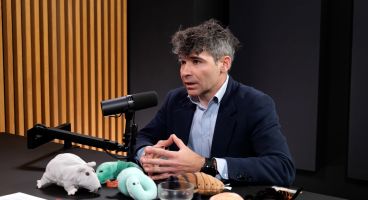


In the latest episode of the NCN podcast, Prof. Margaret Ohia-Nowak and dr inż. Tomasz Szumełda discuss the results of a survey on the use of AI in proposal writing, as well as research into bias in Polish language models—a project led by Margaret Ohia-… czytaj dalej In the latest episode of the NCN podcast, Prof. Margaret Ohia-Nowak and dr inż. Tomasz Szumełda discuss the results of a survey on the use of AI in proposal writing, as well as research into bias in Polish language models—a project led by Margaret Ohia-Nowak and funded by the NCN. Hosted by Anna Korzekwa-Józefowicz.
Two-thirds of NCN researchers oppose the use of generative AI in the evaluation of grant proposals. At the same time, 60% believe that NCN should allow its use in their preparation. This is the main finding of a survey conducted by NCN among principal… czytaj dalej We asked researchers about the use of generative AI in the grant system. The results show that most accept its use in proposal writing, but oppose its involvement in evaluation.
NCN Generation comprises researchers making a significant contribution to the advancement of science. The guest of the third episode is Małgorzata Kot — an archaeologist specialising in the Palaeolithic, lithic technologies and early human migrations. She… czytaj dalej In the third episode of the #NCNGeneration series, we speak with Prof. Małgorzata Kot from the Centre of New Technologies at the University of Warsaw. The archaeologist studies the interface between Neanderthals, Denisovans and modern humans — and what their encounters meant for human culture and early migrations.
On 6–7 May, the 12th edition of NCN Days will take place in Katowice. In this special year, marking the 15th anniversary of the National Science Centre, attendees are welcome to celebrate together and to reflect on the impact of NCN’s role in the research… czytaj dalej On 6–7 May, the 12th edition of NCN Days will take place in Katowice. In this special year, marking the 15th anniversary of the National Science Centre, attendees are welcome to celebrate together and to reflect on the impact of NCN’s role in the research funding system on the quality of research carried out at Polish institutions.
The Polish research team from the Silesian University of Technology, in collaboration with German partners, will investigate the accelerated fatigue performance of materials used, inter alia, in aviation.
The Polish research team headed by Dr hab. inż.… czytaj dalej The Polish research team from the Silesian University of Technology, in collaboration with German partners, will investigate the accelerated fatigue performance of materials used, inter alia, in aviation.
“High-quality research is a matter of national interest. We need to simplify the procedures, integrate institutions into a coherent system, and bridge the gap between research and global innovations.” Six research institutions have made recommendations… czytaj dalej “High-quality research is a matter of national interest. We need to simplify the procedures, integrate institutions into a coherent system, and bridge the gap between research and global innovations.” Six research institutions have made recommendations for the state authorities on research funding and commercialisation in Poland.
In the second episode of the #NCNGeneration series, we speak with Prof. Michał Tomza from the Faculty of Physics at the University of Warsaw. The scientist discusses ultralow temperatures, precision measurements, and the asymmetry between matter and… czytaj dalej In the second episode of the #NCNGeneration series, Prof. Michał Tomza explains how ultracold molecules and ‘perfect vacuum’ help seek answers to one of the greatest questions in physics: why the universe contains more matter than antimatter.
DAINA is a call for research projects carried out by Polish–Lithuanian research teams, jointly announced by the Research Council of Lithuania (Lietuvos mokslo taryba, LMT) and the National Science Centre, Poland (NCN).
Applications may be submitted for… czytaj dalej DAINA is a call for research projects carried out by Polish–Lithuanian research teams, jointly announced by the Research Council of Lithuania (Lietuvos mokslo taryba, LMT) and the National Science Centre, Poland (NCN).
The National Science Centre invites for the fifth time Polish research institutions to declare commitment as potential Host Institutions to Dioscuri Centres of Scientific Excellence.
The deadline for submissions is 11 May 2026.
Announcement… czytaj dalej The National Science Centre invites for the fifth time Polish research institutions to declare commitment as potential Host Institutions to Dioscuri Centres of Scientific Excellence.
Researchers from Adam Mickiewicz University in Poznań, in cooperation with partners from Croatia and Slovenia, will investigate how the HPV virus affects protein trafficking in cells, whilst a research team from the University of Wrocław, in cooperation… czytaj dalej Researchers from Poland, in cooperation with partners from Croatia and Slovenia, will investigate how the HPV virus affects protein trafficking in cells, whilst a Polish research team, in cooperation with partners from Germany, will conduct comparative research on winged altarpieces.
Four research teams involving scientists from Poland have been awarded NCN funding to carry out projects in the field of materials science and materials engineering. The call was organised by the international M-ERA.NET network.
In this edition of the… czytaj dalej Four research teams involving scientists from Poland have been awarded NCN funding to carry out projects in the field of materials science and materials engineering. The call was organised by the international M-ERA.NET network.
Pre-announcement of the long-awaited fifth call for two interdisciplinary Dioscuri Centres of Scientific Excellence for outstanding researchers from around the world up to 15 years after their PhD.
The Dioscuri Programme aims to strengthen international… czytaj dalej Pre-announcement of the long-awaited fifth call for two interdisciplinary Dioscuri Centres of Scientific Excellence for outstanding researchers from around the world up to 15 years after their PhD.