The National Science Centre plans to launch new calls in cooperation with the Spanish Agencia Estatal de Investigación (AEI), which will give Polish researchers the opportunity to obtain funding for bilateral projects carried out jointly with partners from Spain.
OPUS 32+LAP/Weave, in which the National Science Centre will act as the lead agency;
FLAMENCO, in which the Agencia Estatal de Investigación will act as the lead agency.
The joint calls will be carried out in accordance with the Lead Agency Procedure. This means that research projects will undergo merit-based evaluation at only one institution – the lead agency – competent for one of the teams participating in the project, within a call forming part of its own funding offer. Once the evaluation process has been completed, the lead agency will forward to the partner institution, for approval, the list of projects recommended for funding.
The calls will be open to proposals for funding basic research in any scientific discipline covered by one of the 26 National Science Centre panels.
The first FLAMENCO call
As early as August, together with the AEI, we will launch the first edition of the FLAMENCO call, aimed at Polish research teams planning to carry out projects in cooperation with teams from Spain.
ELIGIBILITY REQUIREMENTS:
Proposals should cover basic research and include a plan for joint Polish-Spanish research. Projects involving the purchase or construction of research equipment or activities within research networks will be funded provided that they meet the basic research criterion. Projects consisting solely in the purchase or construction of research equipment or activities within research networks do not meet the funding conditions and will be rejected.
No state aid will be granted under the call.
In any given edition of NCN calls, a person may be named as the principal investigator in one proposal only.
The duration of Polish-Spanish research projects may be 24, 36 or 48 months.
Proposals for NCN funding of the Polish part of the research project may be submitted by the entities listed in Article 27(1), points 1–2, 4–5 and 7–8, of the Act on the National Science Centre.
PLANNED CALL SCHEDULE:
Call announcement: 24 August 2026
Deadline for submitting joint proposals to the AEI: 24 November 2026
Deadline for submitting national proposals in the OSF system: as soon as possible after the joint proposal has been submitted to the AEI, and no later than 7 calendar days thereafter
Announcement of the call results: November 2027
Start of the research projects: January 2028
This advance notice of the call is provided for information purposes only. Detailed terms and conditions will be set out in the official call announcement.
On 15 September 2026, we will launch the OPUS 32 call, which will accept proposals for research projects carried out in international cooperation under the Lead Agency Procedure (LAP) within the Weave programme. For the first time, we will open this route to Polish-Spanish projects.
LAP cooperation in the OPUS 32 call under the Weave programme
In 2026, the National Science Centre continues its cooperation with partner institutions from:
Luxembourg (FNR – Luxembourg National Research Fund),
Belgium – Flanders (FWO – Research Foundation – Flanders).
In addition, under an agreement concluded between NCN and the Spanish agency Agencia Estatal de Investigación del Reino de España (AEI), proposals for projects carried out in Polish-Spanish cooperation may be submitted in the OPUS 32+LAP/Weave call.
As the lead agency, NCN will carry out, within the OPUS 32 call, the merit-based evaluation of OPUS LAP proposals covering the implementation of bilateral or trilateral research projects involving research teams from Poland and from Austria, the Czech Republic, Slovenia, Germany, Switzerland, Luxembourg and Belgium-Flanders under the Weave programme, as well as proposals for the funding of bilateral Polish-Spanish research projects. If a proposal is recommended for funding, NCN awards funds to the Polish research teams, while the relevant partner institutions award funds to the foreign teams.
The OPUS 32 call will accept the following OPUS LAP proposals:
prepared by Polish research teams in cooperation with foreign teams, in accordance with the requirements set out in the OPUS 32 call announcement, which will be published on the NCN website on 15 September 2026,
in any scientific discipline within the NCN panels,
for the implementation of basic research that has not been and is not being funded by NCN or from other sources,
that provide for scientific cooperation based on the balanced and complementary contribution of the research teams applying in parallel for project funding to their respective research funding institutions under the Weave programme and under bilateral Polish-Spanish cooperation. This means that the contribution of each of the teams involved in the project is significant and indispensable, and that the tasks planned for each team complement one another and form a coherent, joint research project. An OPUS LAP proposal which, in the assessment of the Expert Team, does not meet this criterion cannot qualify for funding.
OPUS LAP proposals must be submitted to NCN by the Polish research team via the OSF system by 2 pm on 15 December 2026. In addition, each of the foreign research teams involved in a given project must submit a funding proposal to the relevant partner institution under the Weave programme or, in the case of bilateral Polish-Spanish proposals, to the AEI. In order to submit the proposal correctly, a complete set of the documents required by the relevant partner institution must also be provided to that institution, in accordance with its applicable deadlines and rules. If the partner institution requires a copy of the OPUS LAP proposal to be submitted in its own system, after submitting the proposal in the OSF system, a complete English-language version of the proposal should be generated in PDF format and provided to the foreign research team. The versions of the OPUS LAP proposal submitted to NCN and to the partner institution must be identical.
Is your project interdisciplinary? What do the application limits imply? What are the funding rules? You can find the answers to these and many other questions in our Q&A section for the GRIEG BIS and C&C Kick-off calls.
We have published answers to the most frequently asked questions concerning the GRIEG BIS and Coordination & Capacity (C&C) Kick-off calls under the Basic Research Programme of the 4th edition of the EEA and Norway Grants. We also encourage you to explore the presentation delivered during the information webinar.w
Frequently Asked Questions
Researchers interested in applying for either call can now access our Questions & Answers (Q&A) section, where they can find explanations of the key issues related to the application procedure.
Q&As have been compiled using questions posed by participants of the information webinar of 8 July 2026. The webinar focused on the GRIEG BIS and C&C Kick-off calls launched under the Basic Research Programme. Over 400 representatives from Polish research organisations took part in the event.
During the webinar, NCN representatives described the key features of the two calls, including the eligibility criteria for applicants and partners, requirements for international partnerships, project budgets, application procedures and the evaluation process. They also introduced the matchmaking tool, designed to facilitate cooperation with partners from the Donor States.
Polish researchers might soon be able to cooperate with research teams from Spain and have their cooperation funded. The National Science Centre has started preparations for new calls for proposals in collaboration with Agencia Estatal de Investigación.
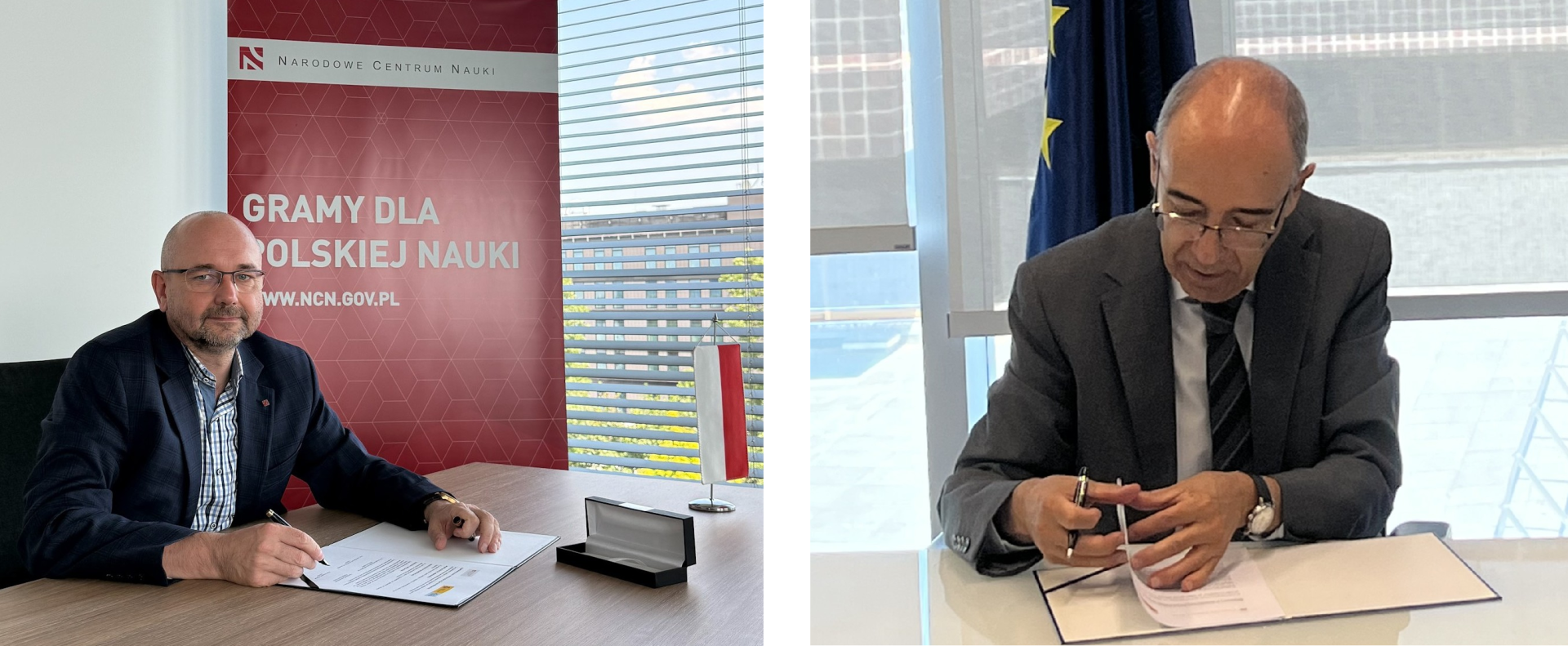
Prof. Krzysztof Jóźwiak and Prof. José Manuel Fernández de Labastida sign the MoU AEI is a Spanish state agency that funds research in all scientific disciplines. NCN and AEI have been discussing for months the possibility of enhancing scientific collaboration between Poland and Spain and have consequently come up with the idea of launching launch joint calls for proposals. The two agencies share a common mission to support basic research and a belief that international research projects are an important catalyst for the development of research and lasting relationships between research centres from both countries.
The discussions on the launch of a joint call for Polish-Spanish research projects are a response to a growing interest in international collaboration among researchers from the two countries and a need to create new opportunities to carry out ambitious research projects.
At the beginning of July, NCN and AEI signed the Memorandum of Understanding laying down the common purposes and framework of cooperation. The MoU was signed by the Director of the National Science Centre Prof. Krzysztof Jóźwiak and Director of Agencia Estatal de Investigación Prof. José Manuel Fernández de Labastida.
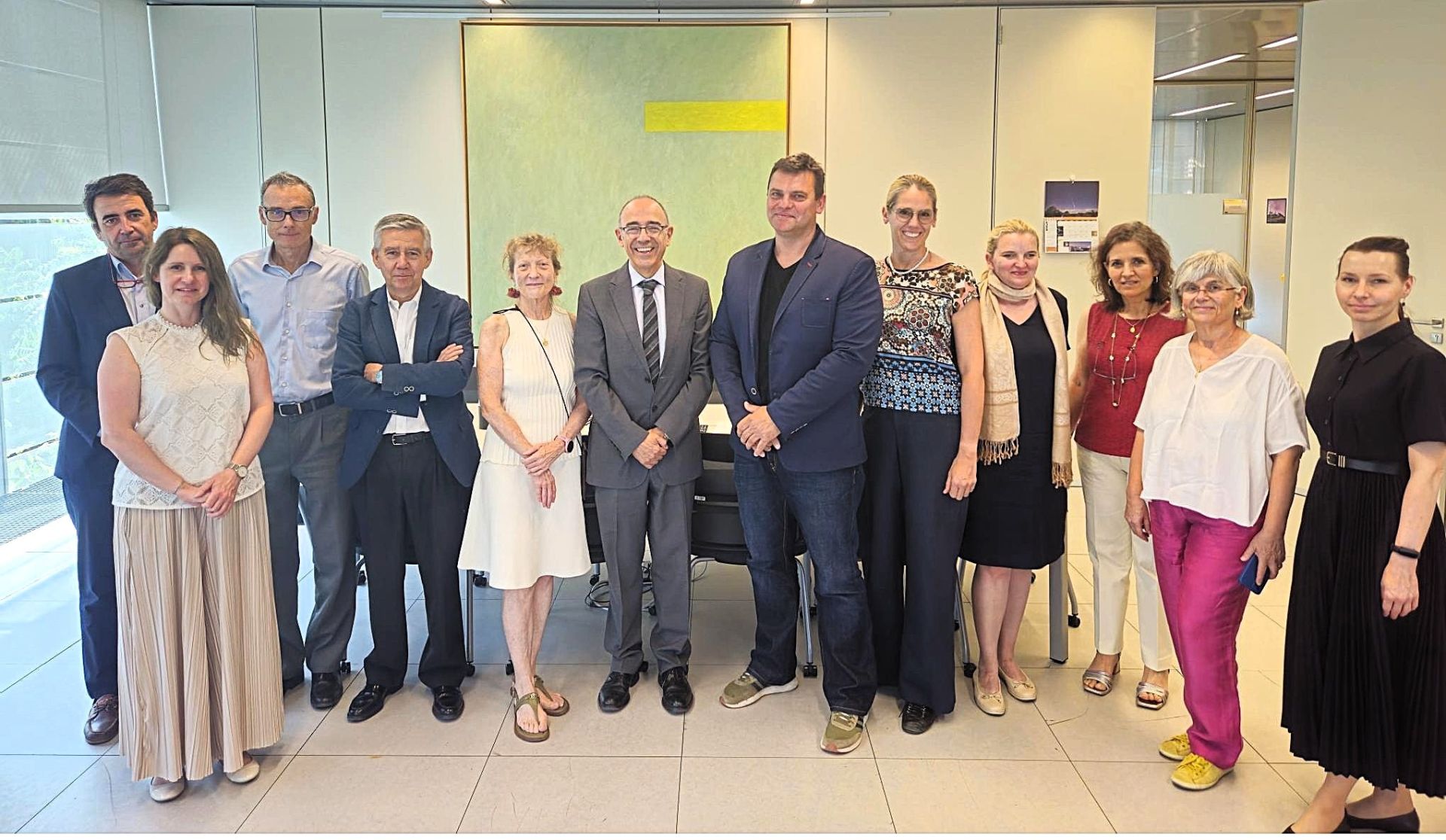
Representatives of the NCN and AEI The representatives of the two agencies met in Madrid to develop the basis for future cooperation between the agencies. Over two days, they discussed the guidelines for the future joint bilateral calls for proposals allowing researchers from Poland and Spain to apply for funding of their joint research projects. They also discussed the organisational processes and proposal evaluation procedures in detail, to make sure that the future calls are as effective and appealing as possible for the scientific community in both countries.
The MoU represents an important step towards strengthening research collaboration between Polish and Spanish research teams. The partnership of NCN and AEI aims to foster knowledge exchange as well as formation of international research teams and implementation of ambitious research projects addressing the critical challenges of current science.
Karolina Safarzyńska, the next researcher in the series, investigates why efforts to bring emissions down are failing despite ever tighter climate policies – and looks for the answer in the way people influence each other.
The NCN Generation is made up of researchers whose work pushes back the frontiers of knowledge and changes our lives – improving health, protecting the environment, advancing technology and deepening our understanding of the world.
Karolina Safarzyńska is a professor at the Faculty of Economic Sciences, University of Warsaw. She works in complexity economics and behavioural economics, and her theoretical models are used to design climate policy measures. She earned her PhD at Vrije Universiteit Amsterdam and has been a visiting researcher at, among others, the Santa Fe Institute – the birthplace of complexity economics – as well as completing traineeships at the UN, the WTO and the World Bank. In 2022 she received the NCN Award.
Preferences take shape in networks
Complexity economics starts from a different premise than the classical approach: rationality is not the only way of making decisions, but one of many modes of behaviour, one that comes into play under particular conditions. In practice, people are often prone to cognitive biases: when buying a car, for instance, they focus on the low purchase price, which looks rational at the time but, seen more broadly, leads to higher running costs and higher emissions. The crucial point, however, is that preferences change above all through social interaction – something classical economics leaves out. We live in a networked world that we cannot escape, one in which information reaching us from every side shapes our political preferences, our behaviour and our buying decisions.
This assumption is what sets her approach apart from mainstream economics. Classical models assume that preferences are fixed – a simplification, she points out, rather than a description of reality. Network models, by contrast, can capture phenomena such as the polarisation of opinion or the spread of consumer fashions.
Why good policies fail
Transport in Europe is subject to emission standards and to measures introduced at city level, yet over recent decades it has remained the only major sector in the EU whose emissions are higher today than in 1990. Karolina Safarzyńska explains this mismatch by pointing to preferences: people buy ever larger cars that burn more fuel even when they are more efficient, and as they grow wealthier they drive and fly more.
As she sees it, her criticism of the mainstream is aimed not at the policies themselves, but at the assumptions on which they are built. Mainstream economists, she argues, design policies that are “elegant and efficient”, and then blame the failure to implement them on an imperfect world or on a political crisis. She turns this reasoning on its head: if policies are socially unacceptable and cannot be introduced, then the question of why people reject them belongs inside the model itself. That is precisely what complexity economics examines – which measures will prove acceptable, and how preferences evolve.
Convenience as a climate mechanism
At the heart of the climate problem, on her account, lies our taste for convenience – a preference as deeply rooted in human nature as our fondness for sweet things. There is nothing wrong with an individual wanting a more comfortable life; the problem arises only at the collective level, when similar behaviours accumulate across whole societies. What interests her is not judging individual choices, but what follows from the fact that we all behave in much the same way.
She sees the same mechanism at work in consumer fashions – in the spread of SUVs across Europe, or in the high number of cars per capita in cities with good public transport. She looks for solutions not in appeals to individuals, but in macro-level policy: investment in renewable energy and regulation to curb the most emission-intensive behaviours. One example she gives is the ban on meat advertising in public spaces now being introduced by Dutch cities.
Climate as a network problem
The network view of the economy, she explains, grew out of the analysis of financial crises – and that is where complexity economics has had its greatest success. A financial crisis is a crisis of a network: banks lend to each other, so a fall in the value of one institution’s assets leaves it unable to meet its obligations and sets off systemic risk. Aggregate models built around a single representative agent cannot capture these dynamics. Climate change analysis, she believes, is heading the same way – although in climate policy this line of thinking is only just opening up.
The effectiveness of this way of thinking became clear, she recalls, during the COVID-19 pandemic, when infection dynamics were driven by the structure of social contacts rather than by aggregate indicators alone. Epidemiological models were good at predicting how the pandemic would unfold, but not at showing how to influence people’s behaviour within networks – and containing it depended on exactly that.
Research toolkit: networks of agents instead of a single individual
Karolina Safarzyńska’s research toolkit rests on large macroeconomic models. In place of the single abstract individual typical of classical models, she introduces whole networks of agents, whose behaviour she increasingly calibrates against empirical data. In one recent project, her team used network models and Austrian data to examine how consumers might nudge each other towards eating less meat and cutting emissions.
Selected quotes
Why the mainstream misses the bigger picture
We have perfect policies designed by mainstream economists, and emissions just keep going up. And they say: “It’s not our fault, the world is imperfect, we have this perfect policy but it can’t be implemented, it’s a political crisis, not an economic one.” But is that really the case? Why don’t our models take account of the fact that this policy is simply unacceptable – and why do we keep treating it as the only, optimal solution when we can’t actually put it in place?
Evolution against the climate
It’s really interesting that you used the word “convenience”, because that’s exactly what we struggle with most. Evolution really is completely against us in this fight against climate change. We like our comforts, and we’re going to keep chasing them. At the individual level, there’s nothing wrong with that. But at the meta level, I’m less interested in the individual and what they do than in what comes out of all of us behaving the same way, in tandem, and what problems that creates for the climate.
A degree of moderation
There are lots of areas where we could change our behaviour, but I don’t want to be the moraliser here, telling people: “Please don’t eat meat, please don’t fly, and please, heaven forbid, don’t get into a car.” There’s a middle ground, a kind of moderation we can all reach together.
Science as a collective effort
Sometimes, in all the competition for the best publications, the best theories, the citations, we lose sight of the fact that we’re working together on a problem that’s really complicated and needs some kind of collective effort. I was disappointed by the way science is evolving – as a highly competitive system built on individual success, one that doesn’t encourage the collective thinking we need to solve global problems.
The #pokolenieNCN series brings together 15 conversations with 15 researchers to mark the 15th anniversary of the National Science Centre. Each conversation lasts 15–20 minutes. They are hosted by Anna Korzekwa-Józefowicz.
Earlier episodes featured Aleksandra Rutkowska, Michał Tomza, Małgorzata Kot, Karolina Ćwiek-Rogalska, Maciej Trusiak and Agata Starosta. Coming episodes will feature Rafał Szabla, Maciej Grzybek and Karolina Kremens. New episodes appear on the NCN YouTube channel every three weeks, on a Thursday. The series will run until the end of the year.
We are pleased to announce the results of OPUS 30+LAP/Weave for projects carried out in bilateral or trilateral collaboration with research teams from Austria and Czechia. The total budget for the Polish part is over PLN 43.6 million.
Under OPUS, funding is available to all researchers, regardless of their academic degree or title, experience or age. Grants must be designated for domestic basic research projects or basic research projects carried out in international collaboration.
The autumn edition of OPUS calls follows the Lead Agency Procedure (LAP), whereby researchers working in Poland may seek funding for bilateral or trilateral research projects involving research teams from Austria, Czechia, Slovenia, Germany, Switzerland, Luxembourg or Belgium-Flanders. The LAP is an efficient international proposal evaluation procedure agreed upon by the research-funding agencies from the above-mentioned countries, including the National Science Centre. It relies on mutual trust to the quality of review and selection processes. Projects are evaluated once, in one country and by one agency only, while the other agencies approve the results of evaluation and award funding thereunder to their respective research teams involved in the international LAP projects. OPUS LAP proposals should provide for a balanced and complementary contribution of the participating research teams from two or three countries to the proposed research.
OPUS and OPUS LAP in numbers
A record number of proposals has been submitted to OPUS 30. Researchers working at the Polish research institutions have submitted 2,359 proposals for a total of over PLN 4 billion, including 267 LAP proposals for a total of over PLN 451 million. The first batch of results was published in June, when funding was awarded to 279 OPUS projects with a value of nearly PLN 571 million. Today, the number of winning projects is increased by another 26, including:
19 bilateral projects carried out by Polish and Czech research teams with a budget of PLN 30,441,129 for the Polish research teams,
6 trilateral research projects carried out by Polish and Austrian research teams with a budget of PLN 11,425,482 for the Polish research teams,
1 trilateral project carried out by Polish, Czech and Austrian research teams with a budget of PLN 1,762,229 for the Polish research teams.
The winning projects are managed by principal investigators from nine Polish cities, working in twenty different research centres. Six projects awarded in Humanities, Social Sciences and Art Sciences address, inter alia, cross-border communication, memoryscape of borderlands, urban life and business relations. In Social Sciences and Engineering, funding was awarded to nine projects covering fluid dynamics, distribution of tropospheric water vapour, and photophysics of xanthene dyes. Eleven grants will go to Life Sciences for projects carried out in collaboration with research teams from Austria and Czechia, focusing on photosynthesis and tick-borne pathogens, as well as ethical and legal concerns when sharing biospecimen.
The topics of recommended OPUS LAP projects carried out in collaboration with researchers from Austria and Czechia, as well as their abstracts for the general public, are available on the ranking lists:
The winning applicants of OPUS 30+LAP/Weave will continue to grow. Approval is still pending for projects involving teams from Slovenia, Germany, Switzerland, Luxembourg and Belgium-Flanders, in addition to Poland. The results will be published as soon as they are approved, and the final results of OPUS 30 will be available in autumn.
Projects based on the results of research funded by NCN will be awarded preferential points in every Akces NCBR acceleration call. Initial data from the call for the Impakt programme show that researchers with prior NCN grant experience are choosing this path.
NCN funds basic research, while Akces NCBR supports teams that already have research results and want to test their market potential. The preferential points are the result of an agreement between the two institutions, signed in March this year.
Initially, the points applied only in the call for the HPN Impakt programme, which ran until the end of May. They now cover all Akces NCBR acceleration calls.
Proposal evaluation in the Impakt call is ongoing, but it is already known that almost one in five of the nearly 120 proposals came from applicants with previous NCN experience. This shows that NCN grant recipients regard acceleration as an extension of their own research work.
The Deep Tech programme
A call for the Deep Tech programme, run by Akces NCBR in cooperation with the NCBR National Contact Point for EU Research Programmes, is currently under way. The programme supports advanced technologies emerging in Poland: artificial intelligence, biotechnology, medical, climate and space technologies, robotics and cybersecurity. Teams with projects at technology readiness levels (TRL) 3–8 may apply to the programme.
Qualifying teams will receive up to PLN 300,000 in grant funding, mentoring support worth around PLN 100,000 and access to the EIC Launchpad track, preparing them to apply to the European EIC Accelerator call. The programme's budget is around PLN 10 million, which will make it possible to support nearly 25 projects. Projects based on the results of NCN grants will receive preferential points during evaluation, increasing their chances of qualifying.
The call remains open until the end of July. Detailed information about the call and the rules of participation is available on the Akces NCBR website.
The Minister of Science and Higher Education has announced a call for NCN Council members. The Council is made up of 24 researchers. Applications can be submitted by 31 July.
The NCN Council was formed pursuant to the Act on the National Science Centre of 30 April 2010. It is made up of 24 scholars from various academic disciplines. Members of the Council are appointed for a period of four years and half of them are replaced every two years.
The Council identifies priority areas in basic research in accordance with the state's development strategy, lays down the terms and conditions for calls for research proposals, allocates funding and publishes calls for doctoral scholarships and postdoctoral fellowships. Furthermore, the Council appoints members of expert teams evaluating research proposals and announces calls for the NCN Director.
Another 78 researchers have joined the group of MINIATURA 10 grantees, who will carry out preliminary studies, conduct library and archive searches, or go on research visits. We present the results for proposals submitted in March.
The small grants can be used to fund research activity that does not yet amount to a full-scale research project but helps researchers plan, test and develop research ideas in preparation for applying to regular national or international grant calls.
The call is open to researchers who obtained their PhD between 1 January 2014 and the proposal submission date. They must have at least one published or accepted-for-publication work to their name, or at least one artistic or artistic-and-scholarly work or achievement.
A single grant has a budget of up to PLN 50,000 and may run for no longer than one year. There are no thematic restrictions: the activities may concern any discipline, but they must fall within basic research. They may take the form of preliminary studies, research visits or library and archive searches and, in justified cases, more than one of these.
MINIATURA includes a mentoring programme through which those carrying out an activity can receive expert support from an experienced mentor in preparing a full-scale research project. NCN mentor database
The grantees and their research
The second ranking list covers proposals submitted to NCN in March. Of 190 proposals, the experts selected 78 research activities for funding, worth a total of over PLN 2.9 million. The vast majority of the funded activities are preliminary studies (66). Twelve people will go on research visits thanks to a MINIATURA grant, and eight will conduct library and archive searches.
In the Humanities, Social Sciences and Art Sciences (HS)group, the recipients include Dr Rafał Młyński, a linguist from the Jagiellonian University. During his research visit, he will analyse the macrostructure and microstructure of narratives produced by Polish-English bilingual teenagers. Dr Anna Kowalik from the Academy of Fine Arts in Warsaw, an art conservator and restorer, will carry out preliminary studies on digital and hybrid methods of preserving the dispersed “Kosmobajki” collection (Se-ma-for, 1966). The main focus of her research will be animation puppets in the role of boundary objects. Dr inż. Piotr Smolnicki from the Gdańsk University of Technology, an architect and urban planner, will diagnose and assess the scope for reintegrating fragmented urban fabric by analysing the opportunities for, and constraints on, implementing pro-urban remedial measures that mitigate the effects of large-scale transport infrastructure in city centres.
In the Life Sciences (NZ) group, the MINIATURA grant recipients include Dr Marta Tkacz from the Pomeranian Medical University in Szczecin, who will carry out preliminary studies under an activity entitled “The kinetics of endothelial progenitor cell mobilisation and the proangiogenic potential of circulating cells in response to maximal physical exertion in athletes”. Dr Katarzyna Zdanowicz from the Medical University of Białystok will study changes in the fatty acid profile of erythrocyte membrane phospholipids in the course of inflammatory bowel disease in children. Dr Magdalena Żegleń from the Bronisław Czech Academy of Physical Education in Kraków will examine problems related to excess body weight and latent obesity and their significance for body-image self-perception.
Among the grantees in the Physical Sciences and Engineering group is Dr inż. Michał Piłat from the Gdańsk University of Technology. He will go on a research visit during which he will develop the multiconfiguration Dirac-Fock method – one of the most advanced computational methods in quantum mechanics – to determine the parameters of inelastic electron-atom collisions. Dr inż. Stanisław Hożyń from the Polish Naval Academy of the Heroes of Westerplatte in Gdynia will conduct research on the resilience of methods for detecting and tracking divers, and for recognising the divers’ gestures, to changing optical conditions across different bodies of water. In the course of the research, he will create a pilot database from a lake, the Baltic Sea and the Adriatic Sea. Dr inż. Justyna Dzięcioł from the Warsaw University of Life Sciences will use her MINIATURA grant to develop a standardised, multimodal characterisation of hybrid cement binders containing bio-based and recycled components.
The topics of all the activities selected for funding under MINIATURA 10 are available in the ranking lists.
Humanities, Social Sciences and Art Sciences – 24 activities worth a total of PLN 571,991
Life Sciences – 31 activities worth a total of PLN 1,389,933
Physical Sciences and Engineering – 23 activities worth a total of PLN 957,370
Total value of the funded activities: PLN 2,919,294.
MINIATURA Still Open
The MINIATURA 10 call is open until the end of July. Proposals are accepted on an ongoing basis and reviewed by a panel of experts, with the results published once a month.
More than 200 representatives of the Norwegian scientific community took part in an information meeting organised at the RCN. The webinar focused on the calls launched under the 4th edition of the EEA and Norway Grants.
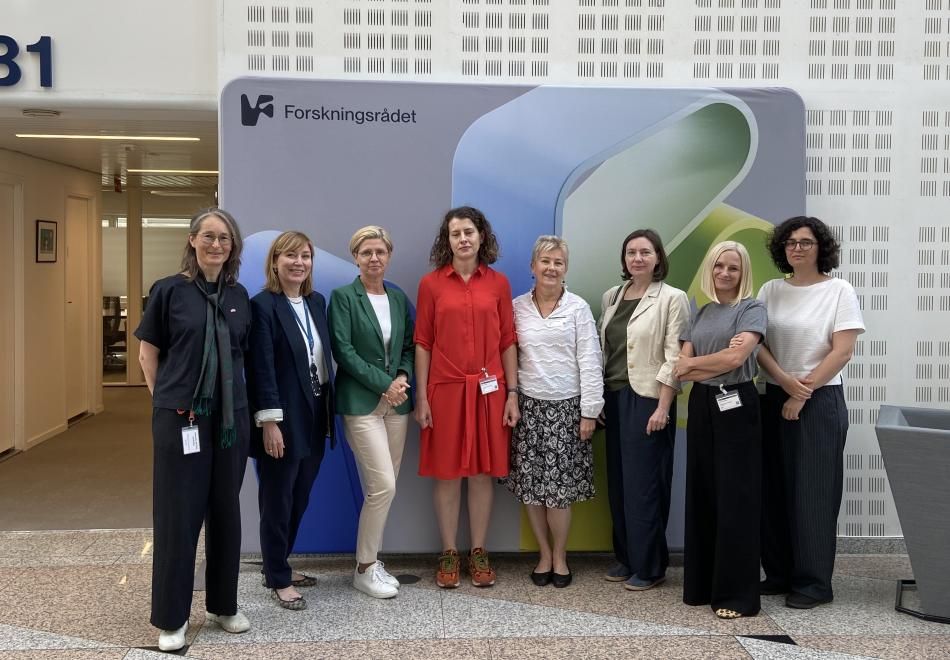
On 22 June 2026, representatives of the National Science Centre (NCN) and the National Centre for Research and Development (NCBR) took part in an information meeting addressed to potential Norwegian partners interested in the calls launched by the two agencies on 17 June.
The meeting was organised by the Research Council of Norway (RCN), the Norwegian research programme partner. More than 200 representatives of the Norwegian scientific community participated in the event.
The webinar highlighted the complementary nature of the two research programmes, enabling Norwegian institutions to participate in both basic and applied research calls. It was also emphasised that bilateral research projects must address at least one of the priority areas of the 4th edition of the EEA and Norway Grants.
The event also included discussions on the knowledge valorisation, understood as the use of research results beyond academia, including their application in social and environmental policies, as well as in patents, technological solutions and business innovations.
Scientific cooperation between Poland and Norway
The webinar was opened by the Ambassador of the Republic of Poland to Norway, Małgorzata Kosiura-Kaźmierska, who highlighted the results of scientific cooperation between Poland and Norway and expressed hope for future cooperation under the 2021–2028 EEA and Norway Grants.
Furthermore, she emphasised the importance of polar research and its relevance in the context of preparations for the International Polar Year 2031–2032.
Presentation of the new calls
Representatives of NCN and NCBR presented the objectives of the research programmes implemented by the two agencies and discussed the GRIEG BIS and POLNORIS calls aimed to support international research projects carried out in cooperation with partners from Norway, Iceland and Liechtenstein.
The meeting concluded with a question-and-answer session, during which the attendees could find out more about participation in the calls. It was announced that a follow-up meeting to discuss the financial aspects will be held at RCN at the end of August / beginning of September.
Webinar for Polish applicants
Please note that an information webinar for the Polish scientific community will be held on 8 July 2026at 10:00 CEST to discuss the calls under the Basic Research Programme.

 As early as August, together with the AEI, we will launch the first edition of the FLAMENCO call, aimed at Polish research teams planning to carry out projects in cooperation with teams from Spain.